
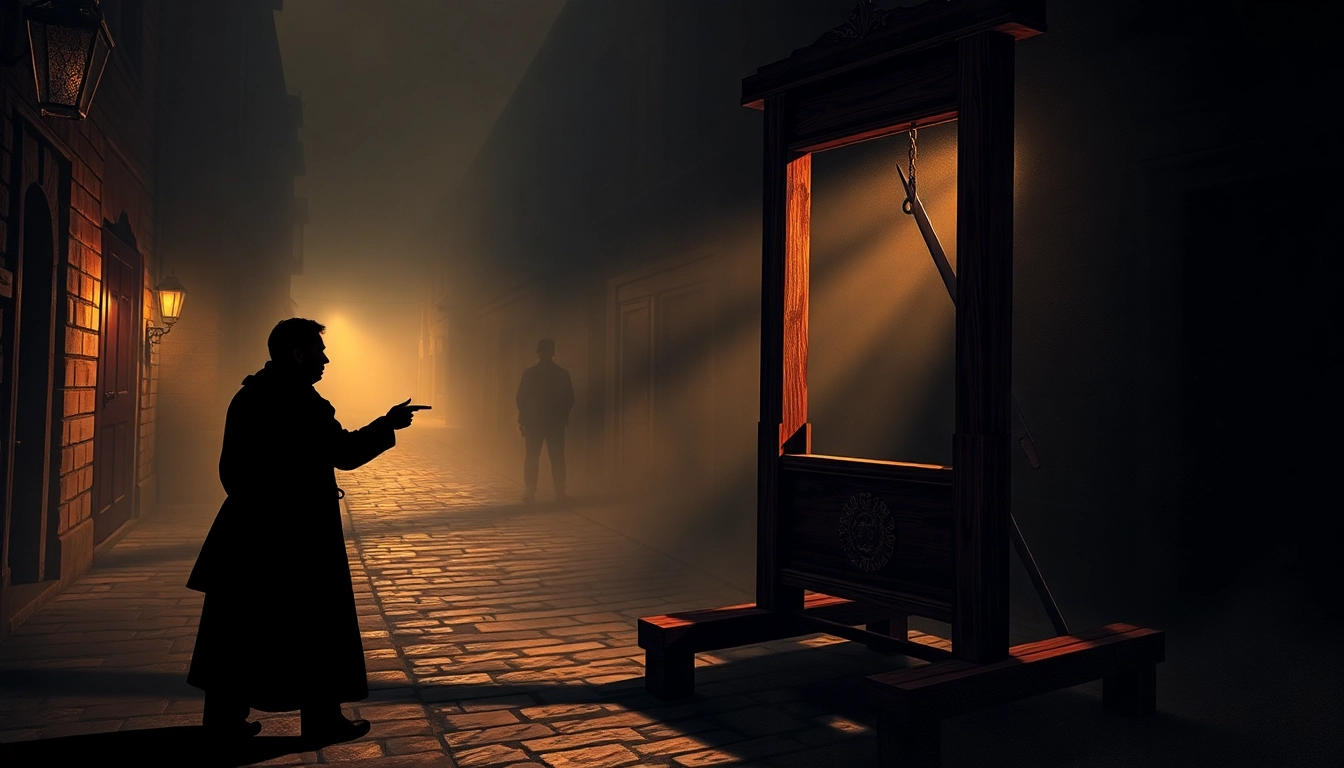
Understanding the Guillotine Origin Phrase
The term guillotine origin phrase carries with it a legacy steeped in history, symbolism, and cultural shifts. A guillotine is more than just a machine; it embodies the dramatic evolution of societal norms surrounding justice and punishment. This article delves into the origins, historical context, and contemporary meaning of the guillotine, offering insights into how this phrase continues to influence modern discourse.
The Etymology of the Guillotine Origin Phrase
The etymology of the guillotine is rooted in linguistics and historical context, emerging from the French term ‘guillotine.’ The device, a radical innovation in execution, was named after Joseph-Ignace Guillotin, a French physician and politician. Introduced in the late 18th century, the guillotine was designed to provide a more humane method of execution, symbolizing Enlightenment ideals of equality and rationality. In essence, the guillotine represented a progressive shift in the legal system.
The Historical Context Behind the Phrase
During the French Revolution, the guillotine became notorious as a tool of the Reign of Terror, a period marked by extreme political purges. The device was intended to serve as a means of equalizing death across social classes. However, its extensive use led to cultural perceptions of the guillotine as a symbol of brutality. The manner of its operation—where a heavy blade descends swiftly to execute a sentence—elicited fear and awe, embedding the guillotine deeply into public consciousness.
How Language Shapes Our Understanding of the Guillotine
Language serves as a vessel for cultural narratives, and the guillotine is no exception. The phrase evokes strong imagery and emotions, often conjuring notions of finality, justice, and horror. It reflects societal attitudes toward capital punishment and justice, stirring debates that continue even today. As languages evolve, so does the interpretation and reception of such phrases, thus shaping our understanding of historical events surrounding the guillotine.
The Role of the Guillotine in History
Guillotine Usage During the French Revolution
The guillotine’s introduction marked a significant turn in the history of capital punishment. It first saw usage on April 25, 1792, during the height of the French Revolution, and quickly became associated with a series of high-profile executions of political figures, including King Louis XVI and Queen Marie Antoinette. These executions were often public spectacles, drawing large crowds and fostering a culture of fear and excitement around the guillotine. Reports from the time often fixated on the chilling efficiency of the device, leading many to view it as a necessary but brutal mechanism of state control.
Public Perception and Influence of the Guillotine Origin Phrase
The public perception of the guillotine transitioned from a tool of revolutionary justice to a representation of excessive violence and tyranny. Literary and artistic works of the period began to reflect skepticism about the morality of such executions. Over time, the phrase surrounding the guillotine evolved to encompass broader themes of justice, retribution, and societal values, indicating a complex relationship between the historical context and its linguistic representation.
Case Studies of Executions and Their Cultural Impact
One notable case involving the guillotine includes the execution of Maximilien Robespierre, a key figure in the Revolution himself. His downfall encapsulated the very cycle of power and retribution that the guillotine symbolized. This event illuminated the paradoxical nature of the guillotine as a symbol of revolutionary justice, underscoring how quickly one could shift from executioner to executed. The cultural narratives surrounding such events not only shape historical documentation but also inform contemporary discussions around power and morality.
Modern Interpretations of the Guillotine Origin Phrase
Language Evolution and Its Effect on the Phrase
As language evolves, so too does the interpretation of historical phrases like the guillotine origin phrase. In contemporary discussions, the term often finds itself situated in debates not just about capital punishment but also about state violence, human rights, and equality under law. The phrase is utilized in various contexts, from philosophical discussions to pop culture references, illustrating its broad relevance beyond its original historical implications.
How the Guillotine Origin Phrase is Used Today
In today’s context, the guillotine origin phrase is often invoked in political and social discourse to critique or analyze issues of justice and societal repercussions of violence. Activists and scholars may use the phrase to challenge existing punitive systems, advocating for reform and reconsideration of what constitutes justice. The guillotine remains a poignant reference point in framing discussions around capital punishment and human rights abuses.
Popular Culture References to the Guillotine
The guillotine has left an indelible mark on popular culture, featuring prominently in literature, film, and art. Its representation often oscillates between the grotesque and the symbolic. Modern stories frequently explore themes of justice, retribution, and the ethical implications of state-sanctioned executions. From historical dramas and novels to art installations that evoke the stark imagery of the guillotine, its cultural footprint remains significant and thought-provoking.
Common Misconceptions about the Guillotine Origin Phrase
Addressing Myths and Facts
One common misconception about the guillotine is that it originated solely as a means of execution during the French Revolution. In reality, variations of the cutting mechanism had existed prior, drawing inspiration from different cultures and practices. The guillotine as a specific design is a product of political and humanitarian movements during a specific historical period, thus requiring a nuanced understanding.
Misunderstood Aspects of the Guillotine’s History
Many people overlook the guillotine’s intended purpose of providing an equal and less painful method of execution compared to previous methods, which could be drawn out and torturous. While this intention highlights a progressive shift, the device ultimately became synonymous with terror and brutality, complicating its legacy as a tool of ‘justice.’
The Paradox of the Guillotine: Justice or Brutality?
The guillotine stands as a paradox in modern discussions of justice—on one hand, it was designed to embody Enlightenment ideals of equality, yet it has become emblematic of state violence and moral ambiguity. The conversations surrounding the guillotine often grapple with the duality of its existence, raising ethical questions about the nature of justice and the extent of its application in society.
Frequently Asked Questions about the Guillotine Origin Phrase
What was the purpose of the guillotine?
The guillotine was created to provide a more humane and equal method of execution during the French Revolution, reflecting Enlightenment ideals of justice.
Who popularized the guillotine origin phrase?
Joseph-Ignace Guillotin, the French physician, is credited with popularizing the term through his advocacy for a more humane method of capital punishment.
How does the guillotine reflect Enlightenment ideas?
It illustrates the pursuit of equality and efficiency in justice, aiming to minimize suffering during executions, which were seen as barbaric at the time.
What cultural impact did the guillotine have?
The guillotine influenced literature, art, and political discourse, symbolizing both revolutionary justice and state brutality, provoking ongoing debates on morality.
Why is the guillotine still relevant today?
It remains topical in discussions around capital punishment, human rights, and state violence, representing ongoing conflicts regarding justice and ethical governance.