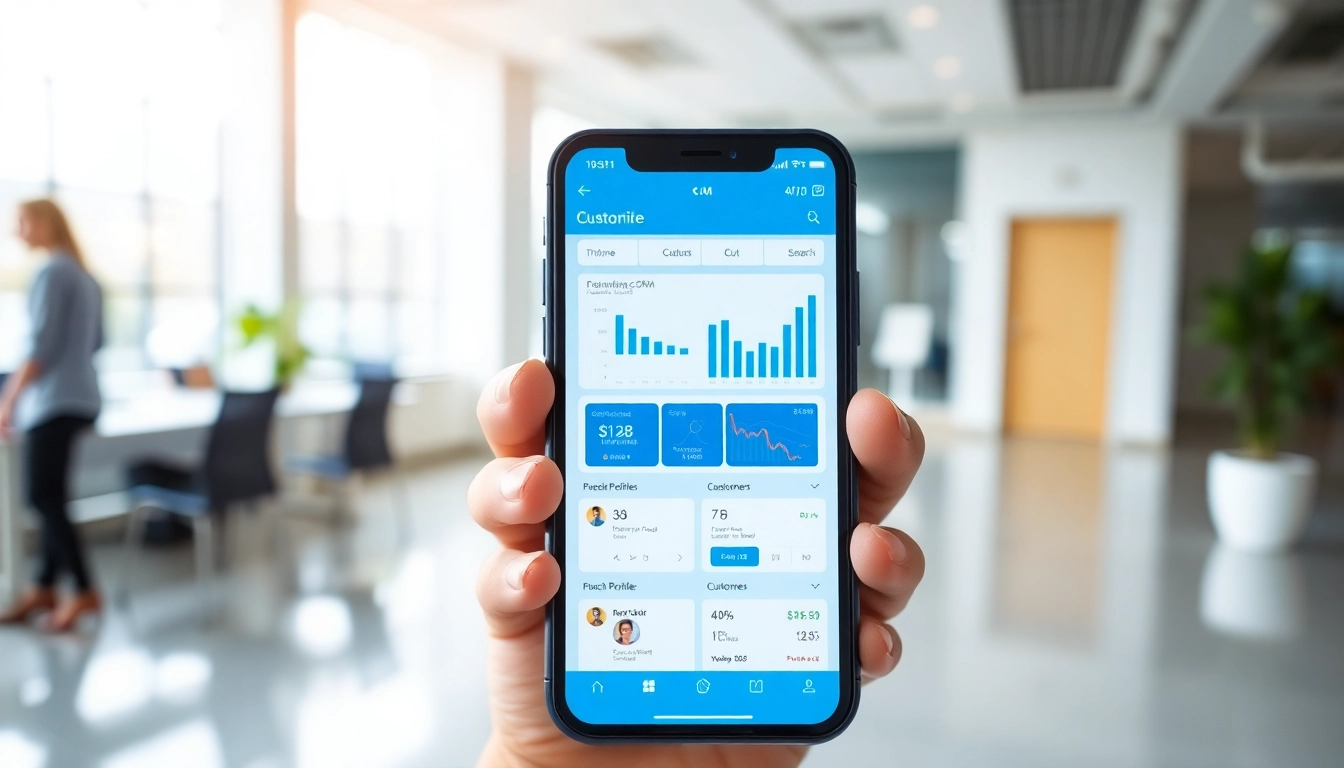
What is Mobile CRM and Why It Matters
Definition of Mobile CRM
Mobile CRM, short for Mobile Customer Relationship Management, refers to software that enables businesses to manage customer interactions and data efficiently while on the move. Designed specifically for mobile devices such as smartphones and tablets, mobile CRM solutions empower users, including sales teams and customer service representatives, to access customer information, update records, and engage with clients anytime and anywhere. This functionality ensures that businesses maintain a competitive edge in a highly dynamic market.
Importance in Today’s Business Landscape
In an era where speed and accessibility define customer expectations, mobile CRM is not just a luxury but a necessity. Organizations are increasingly adopting mobile crm solutions to enhance their customer service. With real-time data access and on-the-go engagement capabilities, businesses can respond swiftly to customer inquiries, streamline operations, and foster stronger relationships. This agility can significantly impact customer satisfaction and retention rates, which are critical in today's economy.
Overview of Features
Mobile CRM applications typically come packed with a variety of features designed to streamline customer relationship management. Some of the essential features include:
- Contact Management: Store and manage customer information efficiently.
- Sales Tracking: Monitor sales activities and pipeline stages directly from mobile devices.
- Task Management: Assign, manage, and track tasks to stay organized while on the move.
- Analytics and Reporting: Generate reports to analyze performance metrics effortlessly.
- Integrations: Seamlessly connect with other applications to unify workflows.
Key Benefits of Implementing Mobile CRM
Improved Customer Engagement
One of the most significant advantages of a mobile CRM solution is enhanced customer engagement. With immediate access to customer data and interaction histories, sales and support teams can provide personalized service. Employees can view previous transactions, preferences, and complaints, enabling them to tailor interactions effectively. This level of personalization fosters trust and loyalty, ultimately leading to increased sales and customer retention.
Enhanced Sales Productivity
Mobile CRM platforms are designed to boost sales productivity by enabling representatives to perform essential tasks from anywhere. Sales professionals can log calls, follow up with leads, and access product information in real-time, away from the office. This can lead to improved time management, as sales teams spend less time transcribing notes back at the desk and more time interacting with prospects. Studies show that companies leveraging mobile CRM systems see significant improvements in their sales performance.
Real-Time Data Access
Mobile CRM enables real-time data access, an essential aspect of making informed decisions. Whether it's receiving notifications about customer inquiries or accessing the latest inventory levels, businesses can respond rapidly to changing circumstances. Real-time updates also ensure that employees are always equipped with the most current data, improving collaboration and decision-making across teams.
Choosing the Right Mobile CRM Solution
Assessing Business Needs
Selecting the right mobile CRM solution requires a clear understanding of your business needs. Start by evaluating your current processes and identifying areas where a mobile CRM can enhance performance. Consider the size of your sales team, the complexity of your sales cycle, and your customers' expectations. Additionally, gather feedback from team members who will utilize the system to ensure that the chosen solution addresses their unique requirements.
Features to Look For
When assessing mobile CRM solutions, consider the following essential features:
- User-Friendly Interface: A clean, intuitive interface enhances user adoption.
- Offline Functionality: Ensure the app can function without internet access, allowing data synchronization once the connection is restored.
- Customizable Dashboards: Look for flexible dashboards that can be tailored to suit different roles within your organization.
- Reporting Tools: Strong analytical features that provide insight into sales activities and customer behavior.
- Integration Capabilities: The ability to integrate with existing tools such as email, calendar, or ERP systems can be a significant advantage.
Cost Considerations
Cost is a critical factor when choosing a mobile CRM. Different providers offer various pricing structures, from subscription-based models to one-time licenses. While it's essential to work within your budget, don't compromise on essential features that could enhance your operational efficiency. Ensure you account for any additional costs, such as training, support, and maintenance, when evaluating pricing plans.
Best Practices for Mobile CRM Use
Training Your Team
To maximize the benefits of your mobile CRM solution, investing in training for your team is vital. Employees must understand how to use the system effectively to avoid frustration and to ensure that they are utilizing all the available features. Conduct comprehensive training sessions, provide user manuals, and establish a support system to answer questions and troubleshoot issues as they arise. Ongoing training and refreshers can also help incorporate new features or updates more seamlessly into daily operations.
Integrating with Existing Systems
Integrating your mobile CRM with existing software systems can streamline operations, reduce manual data entry, and improve accuracy. Identify systems that are crucial for your organization—such as marketing platforms, project management tools, or billing systems—and ensure that the mobile CRM can connect with these tools seamlessly. This integration will create a unified ecosystem of customer data, enhancing the collaborative efforts of your team.
Measuring Success and ROI
Measuring the success of your mobile CRM implementation is essential to justify the investment. Establish clear KPIs (Key Performance Indicators) to track changes in sales productivity, customer engagement, and overall performance. Regularly review these metrics to assess the return on investment (ROI) and determine areas for further improvement. Continuous evaluation will allow you to adapt your strategies effectively and get the most value from your CRM system.
Future Trends in Mobile CRM Technology
AI and Automation Integration
The future of mobile CRM lies significantly in the integration of artificial intelligence (AI) and automation. These technologies can streamline processes such as lead scoring, customer segmentation, and personalized marketing efforts. By leveraging AI to analyze customer data, businesses can predict behaviors and trends, allowing for proactive engagement. Automation can further reduce the administrative burden on teams, enabling them to focus on high-value interactions.
Mobile CRM Analytics
Mobile CRM analytics will become increasingly sophisticated, offering deeper insights into customer interactions and sales performance. Advanced data analytics will allow businesses to uncover patterns and trends that inform strategy and targeting. Tools that can harness big data will cater to the growing demand for insightful analytics, driving better decision-making across teams.
Popularity Among Various Industries
As mobile CRM technology continues to evolve, its popularity will expand across various industries. From retail to healthcare to real estate, the need for accessibility and real-time data will drive its adoption. Industry-specific features will become a focus, enabling solutions to cater to unique challenges faced by different sectors. Customized solutions will enhance efficiency and performance across diverse business landscapes.