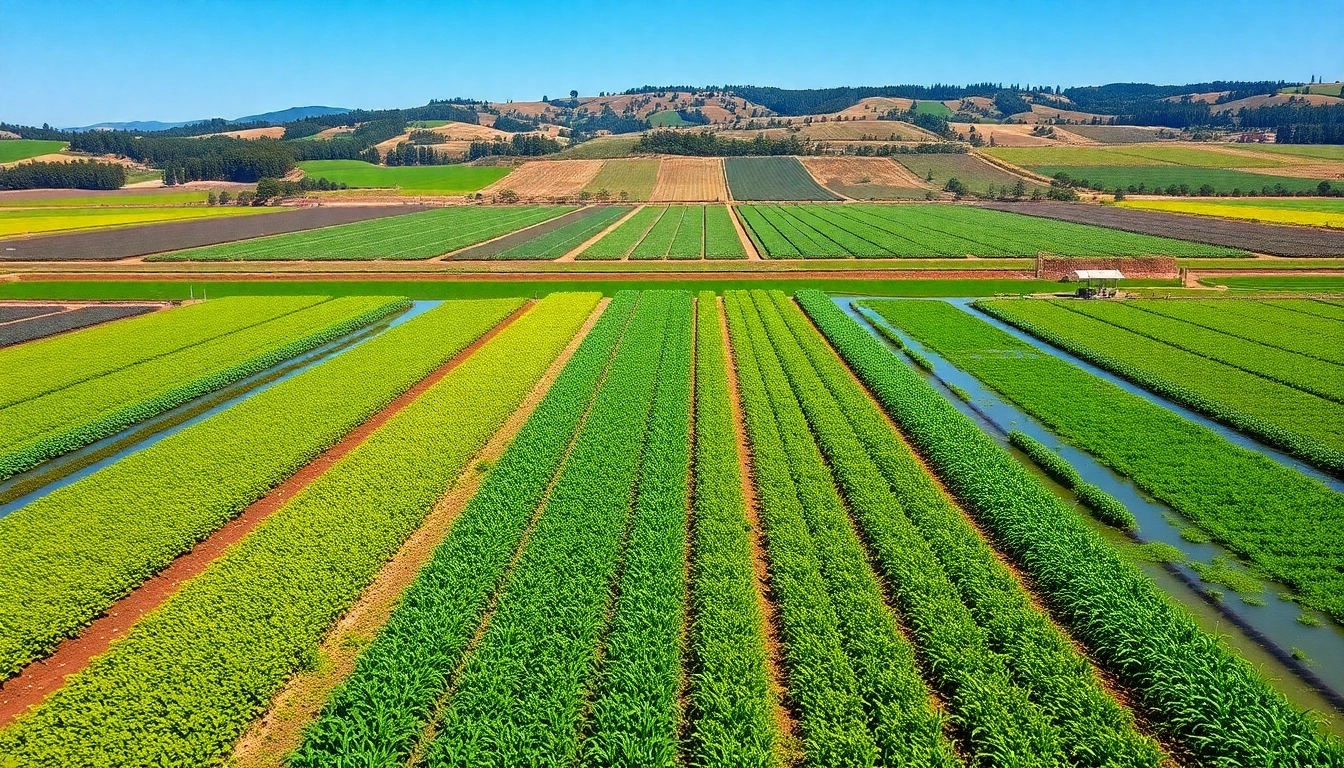
Understanding Land Irrigation
Definition and Importance
Land irrigation refers to the artificial application of water to soil to assist in the growth of agricultural crops, maintenance of landscapes, and revegetation of disturbed soils. It is an essential agricultural practice, particularly in regions where rainfall is insufficient or irregular. Effective land irrigation ensures that crops receive a reliable and adequate water supply, which is crucial for food production, ecological balance, and sustainable farming. With the increasing global population and changing climate conditions, the significance of land irrigation cannot be overstated as it plays a pivotal role in enhancing agricultural yield and conserving water resources.
Common Types of Land Irrigation
There are several types of land irrigation systems, each suitable for different crop types, soil conditions, and water availability. The most common methods include:
- Surface Irrigation: Water flows over the surface of the soil, typically through furrows or basins. This method is simple but can be inefficient due to evaporation and runoff.
- Drip Irrigation: This involves delivering water directly to the plant’s root zone through a network of tubing and emitters. It is highly efficient, reducing water waste and improving crop yields.
- Sprinkler Irrigation: Water is sprayed over the crops in a manner similar to rainfall. It is adaptable to various terrains and effective for different types of crops.
- Subsurface Irrigation: Water is applied below the surface of the soil, targeting root zones directly. This reduces evaporation and minimizes weed growth.
Benefits of Effective Land Irrigation
Implementing effective land irrigation systems has numerous advantages, including:
- Increased Crop Yield: Consistent water supply boosts crop growth and productivity, leading to higher yields.
- Resource Management: Efficient irrigation systems help optimize water usage, reducing wastage.
- Soil Quality Maintenance: Proper irrigation can improve soil structure and health, promoting better water retention and nutrient availability.
- Climate Adaptation: With unpredictable weather patterns, effective irrigation can mitigate the impacts of drought and ensure food security.
Key Techniques for Efficient Land Irrigation
Surface Irrigation Methods
Surface irrigation methods are among the oldest forms of irrigation. They rely on the gravitational force to move water across the land. While they are cost-effective, the efficiency can vary greatly depending on soil type, slope, and crop type. Techniques include:
- Furrow Irrigation: Involves creating narrow channels between crop rows, directing water along these paths.
- Basin Irrigation: Water is applied to flat areas surrounded by embankments. This method is beneficial for tree crops or deep-rooted plants.
- Border Irrigation: Fields are divided into borders, where water is applied along the border edges.
Drip Irrigation Systems
Drip irrigation is recognized for its high efficiency and ability to closely meet the water needs of plants. Key components of a drip irrigation system include:
- Water Source: A reliable source is essential to maintain continuous water supply.
- Pipes and Tubes: A network of pipes delivers water to the plant roots.
- Emitters: Devices that control the flow rate, ensuring a consistent and slow release of water directly to the plant roots.
The advantages of drip irrigation include reduced water usage, lower weed growth, improved soil moisture retention, and less evaporation due to targeted application.
Impact of Technology on Land Irrigation
Technological advancements have significantly transformed land irrigation practices. Innovations include:
- Smart Irrigation Controllers: These devices use weather data, soil moisture levels, and crop requirements to optimize irrigation schedules.
- Remote Sensing: Technologies that utilize satellite imagery to assess field conditions and water needs, improving decision-making.
- Soil Moisture Sensors: Sensors placed in the soil that provide real-time data to help farmers apply water when it is most needed.
Technology not only enhances efficiency but also promotes sustainable practices by reducing waste and improving resource management.
Soil Management and Land Irrigation
Soil Types and Water Retention
The interaction between soil types and irrigation is critical for effective agricultural practices. Different soils have varying capacity for water retention:
- Sandy Soils: These soils drain quickly and require frequent irrigation as they hold less moisture.
- Clay Soils: They retain water well but can lead to waterlogging if over-irrigated.
- Silt Soils: These are ideal for agriculture as they balance drainage and water retention effectively.
Understanding soil types allows farmers to tailor their irrigation methods and schedules to maximize efficiency and crop health.
Enriching Soil for Optimal Irrigation
Soil enrichment involves improving soil structure and fertility to enhance its ability to hold moisture and nutrients. Strategies include:
- Organic Matter Addition: Incorporating compost, mulch, and manure boosts soil fertility and moisture retention.
- Crop Rotation: Rotating crops enhances soil nutrients and structure, improving water retention.
- Cover Cropping: Planting cover crops prevents erosion and improves soil health during off-seasons.
By enhancing soil fertility, farmers can improve the overall effectiveness of their land irrigation practices.
Assessing Soil Health
Regular assessment of soil health is vital to maintain productive and sustainable land irrigation systems. Indicators of soil health include:
- Soil pH: Affects nutrient availability; regular testing ensures it remains in optimal range.
- Nutrient Levels: Testing for key nutrients such as nitrogen, phosphorus, and potassium helps in understanding soil fertility.
- Soil Structure: Good structure aids in moisture retention and air circulation, which are essential for crop health.
Regular monitoring allows farmers to make informed decisions about amendments needed to maintain soil productivity and irrigation efficiency.
Environmental Considerations in Land Irrigation
Water Conservation Strategies
Water conservation is crucial, especially in regions facing water scarcity. Effective strategies include:
- Rainwater Harvesting: Collecting and storing rainwater for irrigation reduces reliance on groundwater and other sources.
- Soil Conservation Practices: Proper land management techniques prevent erosion and enhance water retention.
- Drip and Sprinkler Systems: These technologies minimize water loss and improve application efficiency.
Water conservation not only supports agricultural sustainability but also aids in ecosystem preservation.
Negative Impacts of Over-Irrigation
While irrigation is essential for agriculture, over-irrigation can lead to several negative outcomes, including:
- Soil Salinization: Excess water can cause salt buildup, affecting crop growth and soil health.
- Waterlogging: Saturated soils can reduce oxygen availability for plants, leading to decreased yields.
- Reduced Biodiversity: Over-irrigated areas may lead to habitat loss and adverse effects on local flora and fauna.
To mitigate these impacts, farmers must adopt sustainable irrigation methods and monitor soil moisture levels closely.
Regulatory Guidelines for Sustainable Practices
Governments and agricultural organizations often provide guidelines to promote sustainable irrigation practices. Key regulations may include:
- Water Usage Limits: Policies aimed at minimizing water extraction from natural sources.
- Environmental Impact Assessments: Mandatory assessments for new irrigation projects to evaluate potential environmental effects.
- Subsidies for Efficient Technologies: Financial support for farmers adopting modern irrigation technologies.
Compliance with these regulations helps ensure water resources are managed sustainably while promoting agricultural productivity.
Measuring Success in Land Irrigation
Performance Metrics and Evaluation
Evaluating the success of land irrigation practices requires specific performance metrics, such as:
- Water Use Efficiency (WUE): The ratio of crop yield to the volume of water used can indicate the effectiveness of irrigation practices.
- Crop Yield: Monitoring the quantity and quality of produce can help assess the impact of irrigation methods.
- Soil Moisture Levels: Regular monitoring ensures that soil remains within an optimal moisture range for different crops.
Using these metrics, farmers can continuously improve their irrigation practices for better productivity and sustainability.
Case Studies of Successful Irrigation
Many regions worldwide have adopted innovative irrigation strategies with remarkable success. For instance:
- Israel: Known for its advanced drip irrigation technology, Israel has transformed arid landscapes into productive agricultural zones.
- The Netherlands: Emphasis on precision irrigation and water management has made the country a leader in sustainable agriculture.
- California: Where water scarcity presents challenges, innovative practices like rainwater harvesting and soil moisture sensors are being employed.
These case studies demonstrate the importance of adopting efficient irrigation methods tailored to local conditions.
Future Trends in Land Irrigation
Looking ahead, several trends are likely to shape the future of land irrigation:
- Automation and AI: Automated irrigation systems powered by artificial intelligence will optimize water usage and improve efficiency.
- Climate-Resilient Practices: Strategies that adapt to changing climatic conditions will become increasingly vital as agricultural challenges evolve.
- Data-Driven Irrigation: Utilizing big data to analyze soil and climate conditions will drive more efficient resource management.
Staying ahead of these trends will equip farmers to meet future challenges effectively and sustainably.
Frequently Asked Questions
What is land irrigation?
Land irrigation is the artificial application of water to soil for agricultural purposes, ensuring crops receive adequate moisture for growth.
What are the benefits of drip irrigation?
Drip irrigation conserves water by delivering it directly to plant roots, reducing evaporation and minimizing weed growth, resulting in higher yields.
How does soil type affect irrigation?
Soil type influences water retention; sandy soils drain quickly requiring more frequent irrigation, while clay soils retain water but can suffer from waterlogging.
What are the negative impacts of over-irrigation?
Over-irrigation can lead to soil salinization, waterlogging, and reduced biodiversity, which harm crop yields and soil health.
How can farmers improve irrigation efficiency?
Farmers can enhance irrigation efficiency by adopting techniques like drip irrigation, monitoring soil moisture, and complying with sustainable practices.