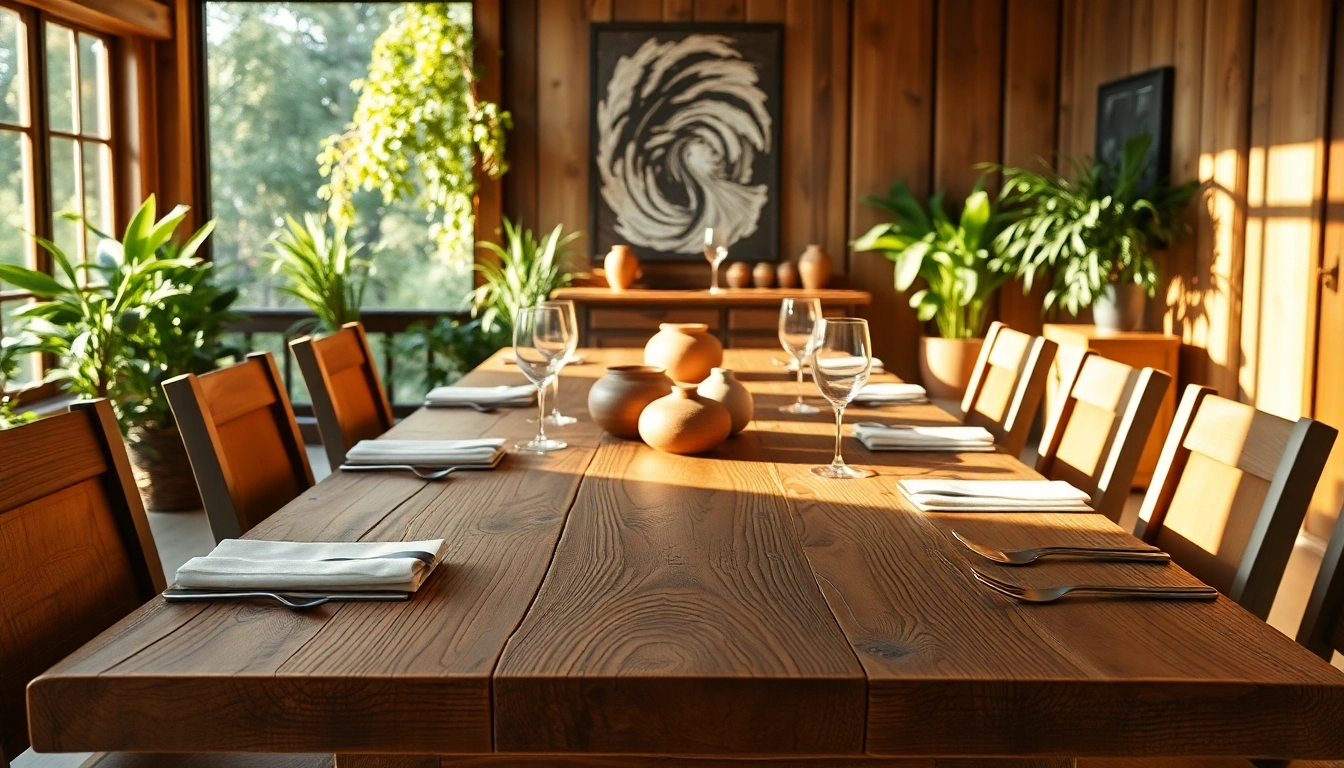
Understanding Solid Wood Tables
The Basics of Solid Wood Tables
Solid wood tables are a cornerstone of high-quality furniture, exemplifying durability, craftsmanship, and natural beauty. Unlike tables made from composite materials or laminates, solid wood tables are constructed entirely from timber derived from trees. This offers unparalleled integrity and strength, making them a popular choice for dining rooms, offices, and living areas. The presence of natural wood has a warm aesthetic that complements various interior design styles, from rustic to modern.
Additionally, Solid wood tables often come with unique grain patterns and color variations, lending each piece a unique identity, which cannot be replicated by artificial or synthetic materials. Because of these attributes, solid wood tables are considered not merely as furniture but as artworks that can become heirlooms passed down through generations.
Benefits of Choosing Solid Wood Tables
Choosing solid wood tables comes with an array of benefits that enhance the value and functionality of any living space:
- Durability: Solid wood tables are built to withstand the test of time. Unlike particleboard or MDF, which can warp or degrade, solid wood maintains its form and structural integrity, providing long-lasting use.
- Natural Aesthetics: The rustic charm and natural beauty of wood can elevate any room's decor. Available in various species, such as oak, maple, cherry, and walnut, these tables can complement different design themes.
- Repairability: Unlike mass-produced furniture, solid wood can often be sanded, refinished, or repaired, allowing owners to restore tables as they age rather than replacing them entirely.
- Investment Value: Solid wood furniture tends to retain its value well over time compared to items made from synthetic materials, making them a wise financial investment.
- Sustainability: When sourced responsibly, solid wood contributes to sustainable building practices. Many manufacturers focus on using sustainably harvested timber, reducing the environmental impact.
Key Features of Quality Solid Wood Tables
To ensure that a solid wood table meets high standards, there are several key features to consider:
- Wood Type: Different woods yield varied aesthetics and levels of durability. Hardwoods like oak and maple are robust, while softer woods like pine may not withstand heavy use as well but can offer a lighter aesthetic.
- Joinery Techniques: Quality solid wood tables often utilize traditional joinery techniques (like dovetail or mortise-and-tenon) that provide additional strength and stability compared to simple screws or nails.
- Finishing: A durable finish protects the wood while enhancing its natural beauty. Look for stain or oil finishes that penetrate the surface and provide deep protection.
- Design Consistency: Quality tables will feature consistent grain and color, ensuring that they appear uniform and high-end. This also reflects the manufacturer's attention to detail in sourcing materials.
- Weight: Solid wood tables tend to be heavier than their composite counterparts, indicating the density and quality of the wood used.
Types of Solid Wood Tables
Dining Tables: The Heart of the Home
Dining tables are often seen as the centerpiece of a home, where family and friends gather to share meals and conversations. Selecting the right solid wood dining table involves considering both size and style:
- Round Tables: Ideal for smaller spaces, round tables promote conversation and can fit snugly into compact dining areas, enhancing an intimate atmosphere.
- Rectangular Tables: These are perhaps the most traditional shape and offer a versatile option that can accommodate more guests, perfect for larger families or entertaining.
- Extendable Tables: Ideal for those who often host gatherings, extendable dining tables allow for flexibility in size and can be adjusted based on your needs.
When choosing a dining table, ensure you measure your dining area accurately and understand how many people you wish to accommodate regularly. This will help you select a table that fits perfectly in your space without feeling cramped.
Coffee Tables: Styles and Functionality
Coffee tables are essential for aesthetic appeal and practical functionality in a living space. Solid wood coffee tables come in various styles, from sleek modern designs to rustic farmhouse aesthetics:
- Standard Coffee Tables: Rectangular and often low to the ground, these are the most common type, providing ample surface area for drinks, books, and decor.
- Ottoman Coffee Tables: Multifunctional pieces that can act as both a coffee table and an additional seat. They often have upholstered tops, adding comfort to the living area.
- Nested Tables: These are stylish solutions for compact living areas, featuring multiple smaller tables that can be combined or separated as needed.
When selecting a coffee table, consider the height of your seating and the overall design theme of your living area. The coffee table should enhance your space without dominating it.
Office Tables: Merging Aesthetics with Productivity
A solid wood table in an office setting can create an inspiring and productive work environment. These tables offer a timeless look alongside functional workspace solutions:
- Desks: Solid wood desks provide both durability and a touch of elegance. Whether you prefer a classic executive desk or a minimalist modern style, there’s a solid wood option to suit your workspace.
- Conference Tables: Equip your meeting rooms with long, solid wood conference tables that encourage collaboration and discussion. Configure them for larger gatherings or intimate brainstorming sessions.
When designing an office, consider the visual and tactile warmth of solid wood, which can enhance both creativity and focus in your workspace.
Choosing the Right Solid Wood Table
Considerations Based on Room Size
Choosing the appropriate size for a solid wood table depends heavily on your available space. Here are vital considerations:
- Measuring Your Space: Always measure your room before selecting a table to ensure it fits comfortably and leaves sufficient space for movement.
- Table Shape: The shape of the table can affect how it fits into your room. Round tables may work better in tight spaces, while rectangular tables can maximize the use of larger rooms.
- Proximity to Walls: Leave at least 36 inches between the table and the nearest wall or furniture to facilitate easy movement around the table.
Wood Types and Their Characteristics
Understanding wood types can significantly influence your choice for solid wood tables:
- Oak: Known for its strength and durability, oak has a distinctive grain and is available in both red and white varieties, each offering different color tones.
- Maple: A dense hardwood, maple is popular for its smooth surface and often light color, ideal for modern adaptations.
- Cherry: Valued for its rich color that deepens over time, cherry wood adds warmth and elegance to any table.
- Walnut: Dark and rich in color, walnut exhibits striking grain patterns, making it a sought-after choice for high-end tables.
Finishes and Aesthetics: Finding Your Style
Finishing plays a crucial role in enhancing the appearance and longevity of solid wood tables. Common finishes include:
- Stain: This adds color while still allowing the wood grain to show through, offering a balance of protection and beauty.
- Oil: Oil finishes penetrate the wood, enhancing its natural beauty and providing protection against moisture.
- Varnish: For a glossy, protective finish, varnish creates a hard outer layer that can safeguard against scratches and spills.
When choosing finishes, consider the overall design theme of your home and pick a shade that complements your existing decor.
Maintenance and Care for Solid Wood Tables
Cleaning Techniques for Longevity
Proper maintenance and cleaning can significantly extend the life of solid wood tables. Here are best practices for keeping them in top condition:
- Dust Regularly: Use a soft, dry cloth to remove dust and debris. Avoid using damp cloths as moisture can warp the wood.
- Use Coasters: Protect your table from water rings and heat damage by always using coasters for drinks.
- Gentle Cleaning Solutions: For deeper cleaning, use a solution of mild soap and water, ensuring you wipe it down with a dry cloth afterward to prevent moisture damage.
Restoration Tips for Aging Wood
If your solid wood table shows signs of wear, consider these restoration tips:
- Sanding: Lightly sand the surface with fine-grit sandpaper to remove scratches and old finishes before applying a new coat of finish.
- Refinishing: Apply an appropriate finisher after sanding, ensuring to allow it to cure as per the manufacturer’s instructions.
- Wood Fillers: For deeper gouges, consider using wood fillers that match the color of your table. Apply carefully, sand after drying, and refinish.
Protection Against Scratches and Damage
To maintain the aesthetic appeal of solid wood tables, it’s crucial to protect them from scratches or damage:
- Soft Pads: Place felt pads under objects placed on the table to prevent scratching.
- Tablecloths and Placemats: For dining tables, consider using tablecloths or placemats during meals to shield against spills and wear.
- Avoid Direct Sunlight: Keep the table out of direct sunlight or use window treatments to minimize UV damage that can cause discoloration over time.
Incorporating Solid Wood Tables in Home Decor
Design Ideas for Modern Homes
Solid wood tables can be seamlessly integrated into various design aesthetics with creative ideas:
- Rustic Style: Pair with wrought iron or distressed finishes to enhance the rustic feel. Use natural elements like potted plants and wooden accents as decor.
- Modern Minimalism: Opt for sleek lines and minimalist accessories that emphasize simplicity and functionality.
- Industrial Charm: Combine with metal elements like exposed beams or pendant lights to reflect a trendy industrial vibe.
Complementary Furniture and Accessories
Consider the furniture pieces and accessories that will complement your solid wood table:
- Chairs: Choose chairs that match the style and finish of the table for a cohesive look, mixing materials for an eclectic feel if desired.
- Sideboards and Buffets: Incorporate additional wood furnishings that showcase the same wood species or stain to create harmony in the dining area.
- Decorative Accessories: Utilize artwork, vases, or table runners to enhance the table’s aesthetic appeal while remaining functional.
Personalizing Your Solid Wood Table
Adding personal elements to your solid wood table can make it uniquely yours:
- Engravings: Consider engraving initials or significant dates into the wood for a personalized touch.
- Custom Finishes: Work with a craftsman to apply a custom stain or finish that fits your vision.
- Accessories: Use personalized coasters or dishes that reflect your personality and style to accentuate the table.